We are the Answer, Where Are You is the Question: A Reading for the Seder
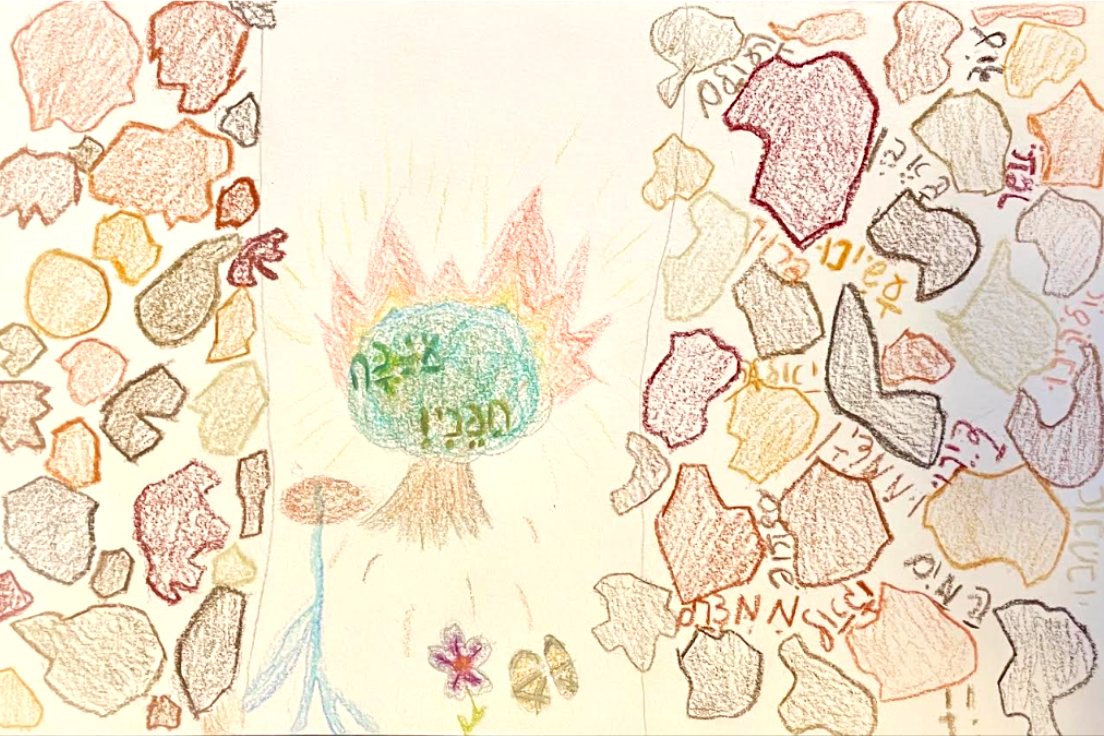
Art by Elisheva B-W
אֲנַחְנוּ עוֹנִים, אַיֶּכָּה הִיא הַשְּׁאֵלָה
We are the Answer, Where Are You is the Question
by Hebrew Gimmel Students 5786 with Rabbi Amy Josefa Ariel
הִנֵּנִי. אַיֶּכָּה?
Here I am. Where are You? We have been asking across every generation.
.מִמִּצְרַיִם וּמִמִּדְיָן
From Egypt and from Midian, from every narrow place where we have stood with trembling hands and packed our bags anyway.
הַמַּיִם לֹא נֶחְרָבִים.
Water is never destroyed. It just keeps moving. The Nile that carried a basket is the same water that split, that closed, and into which we add salt and dip our כַּרְפּס. It is the same water that runs as tears on our faces.
הַמַּיִם לֹא נִלְחָמִים בָּאֶבֶן.
Water does not fight the stone. It changes it.
עָשִׂינוּ זֹאת בְּפַחַד, וְנַעֲשֶׂה כֵן שׁוּב.
We did it scared, and we will do it again.
Sometimes bravery looks like standing before a burning bush and not turning away. Sometimes bravery sounds like making a blessing over oil even when it’s only enough for one day. Sometimes bravery feels like walking into the sea up to our necks, believing that either it will split open or we will be strong enough to swim.
So we say to one another, “be strong”:
חַזַּק וֶאֱמָץ. וְנֵלֵךְ יַחַד.
And we go together.
אֲנַחְנוּ עוֹד שׁוֹאֲלִים, וַאֲנַחְנוּ הַתְּשׁוּבָה.
We are still asking, and we are the answer.
דַּיֵּנוּ.
It is enough.
יַאלְלָה!
Let's go!
בָּרוּךְ אַתָּה יְיָ, אֱלֹהֵינוּ מְקוֹר הָעוֹלָם, אֲשֶׁר גְּאָלָנוּ וְגָאַל אֶת אֲבוֹתֵינוּ וְאִמּוֹתֵינוּ מִמִּצְרָיִם.
Blessed are You, Adonai our God, fountain of the universe, who redeemed us and redeemed our ancestors from Egypt.
********
My students and I started with a question:
What is the prayer we need this Passover?
We are a small group. I’m a rabbi in my 50s and they are 9-12 year olds who have been learning together with me for a few years. They can decode Hebrew fluidly, have either mastered or become familiar enough with core prayer vocabulary to be able to translate all of the main prayers in Shabbat morning worship, know trope and use it twice a month on Shabbat mornings, and can write in Hebrew script.
Which is to say, these students have a dynamic relationship with both Hebrew and prayer.
They know we’ve inherited prayers from our ancestors and they know rabbis write prayers all the time. We’ve also written prayers together before, they know they can write their own prayers, too.
It was two weeks before Pesach, and we shared some of our thoughts about Passover and about where we were and where we wanted to be.
I took notes:
I like prayer when it’s poetic.
I’m thinking about Moses and the burning bush, I feel like I’m at the bush and it’s NOT burning.
Like, HINEINI already! I’m waiting! Where are you, God?
I’m thinking about those 4 questions. I have so many more than 4 questions.
I feel like, you know you make a mistake and you are IN a bush.
Or like, you want to crumple up in a ball, but instead of that you want the bush to set on fire.
My flocks are running amok. It’s chaos. They are not where I wanted them to be.
What if there was no fire? What if Moses had just . . . what if there was no fire?
You know, back then we were organizing to get out of Egypt and now we are organizing to help our neighbors.
Remembering how much bravery we had in the Torah . . . I mean, we could have that kind of bravery now, too. We need to have. We need to step up now and help each other the way they helped each other. I mean, they had to have, or they wouldn’t have all gotten out.
We needed water - fresh water we could drink - for this trip we went on.
The water when we escaped was salty.
Water also causes erosion. Water organizes in a way humans can’t. It’s like Akiva and that rock, too.
Water isn’t destroyed or turned into something new. A dino or any one of our ancestors could have taken a drink of the same water that’s in my glass now.
We had all of the elements in the desert. We have them now, too.
We also talked about the Hebrew we know.
We talked about Passover Hebrew.
We wanted to name Egypt, but also Midian.
We wanted water and bravery and we wanted to say that being brave isn’t about not being scared.
Everyone agreed we needed the word דַּיֵּנוּ (dayeinu) in our poetic prayer.
And “yalla” because, let’s GO already!
When we talked about the chatima, that last line of a prayer or blessing, we thought maybe there was a way to make that line extra special. We’d just been learning in our Shabbat mornings about many of the ways we name God in Judaism, including m’kor - fountain. We thought that felt exactly right here.
Between class and class, I imagined myself between one wall of water and another, between Egypt behind me and wilderness in front of me, and I sat with the words and ideas of my students and began to thread them together. I consulted with a native Hebrew speaker to edit our Hebrew.
In the second class we took their words and ideas and my threads and wrote a final draft.
Then we read it again, taking turns with the Hebrew and the English.
I teach online, and there are moments when I am teaching in which I can feel our ancestors looking over my shoulder. As my students read, I could almost feel an arm brush my ear pointing at a word on the screen. I heard the whisper of a quick intake of breath at, “We did it scared” and a sigh at, “we will do it again.” Typically, that imagined experience is mine alone.
But this time, after the last words of the prayer, one of my students smiled and said, “I think our ancestors would like this one. Our Torah ancestors, our rabbi ancestors, and our family ancestors, too.”
Me, too.
“It needs art,” a student decided.
“And it’s really good. It could help people. We should share it.”
“Okay,” I said, smiling.
We recommend including this prayer at the end of the Magid section of the seder.
Chag Pesach Sameach!
P.S. If you’d like to share what you think of this piece we created, I’ll share any comments you write here with my students. See you at Sinai!
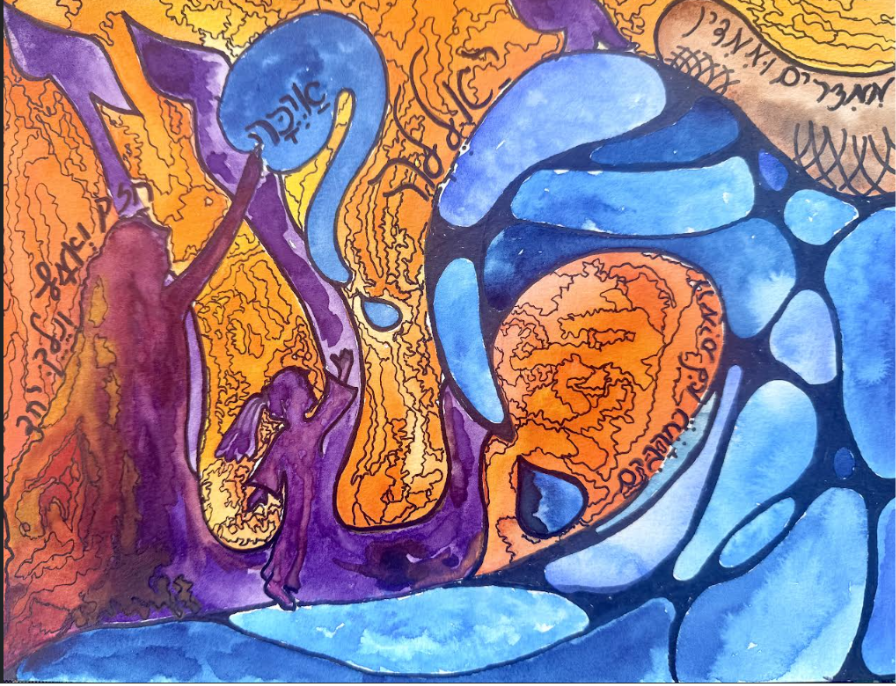
Art by Amy Josefa Ariel